
I'd gotten out of high school in 1940, and you could tell the war was coming. You know, the march into Poland and all kinds of things. And Britain was in it early and so on. So I was saving money to go to college. Nobody else in my family had gone to college. I have four sisters.He first came to Syracuse, NY in March 1943 as part of his training as a navigator for the Army Air Force. He didn't actually get to Europe until 1944, where he flew seven missions before bailing out of a (probably) sabotaged plane and ending up in Stalag Luft 1. When the prison camp was liberated, he was evacuated to France, where he met General Eisenhower:
So I didn't go to college. I went to work for a valves company and did all kinds of other things. Eventually, after Pearl Harbor, all young men wanted to get into the service, and most of us wanted to be a hot pilot. I went to get a physical and was rejected because of a deviated septum. I went and got it operated on and went back the same day. And I remember the doctor looked at me and pulled the cotton out and said, "I can't even see, but I can tell you've had an operation done on your nose. Accepted." And then you went to basic training, Atlantic City, then to a classification center in Nashville, where you had all kinds of tests. Then you'd go to the bulletin board, and if your name was on it in the right way, you'd go to an officer's school. If it wasn't you'd go to a gunnery school and be a noncom, or an enlisted man, a gunner. I evidently made it to navigation school at Monroe, Louisiana, and the government spent about $87,000 on each of us and taught us to navigate by the stars, celestial navigation, and then they sent us to Europe. And my sextant to do the star sighting was in a polished wooden box at the corner of my muddy tent in Italy. But if they needed to, they could have sent me the Pacific, you see. So that's the way it was.
Yeah, we were in Marseilles, on a chow line, ready to be shipped out. And usually, by boat, which gave them a chance to fatten us up on the way over to the States. Anyway, the story goes like this. We noticed this commotion, and here comes Ike Eisenhower and a whole retinue of people with him. And he stopped and it sounds like I'm making this up, but I swear, I'm not. He stopped the guy next to me and he said,
"Where are you from, son?"

And the guy said, "Kansas, sir."
"Oh, the hell you are. You know, I'm from Kansas too," and they both laughed. And he says, "Got a question to ask you," says Ike. "Would you rather go home quickly, or in style?"
And this kid, without missing a beat, said, "Both, sir." And he laughed and moved on. And that's a wonderful memory of a world renowned figure and humanizing. And he was that way with the troops, and it was genuine. You know, it wasn't phony. "Oh, the hell you are. I'm from Kansas." You know, it was like-- it made him very human and special.
Eventually, Frank made it back to the States, and went to college on the G.I. Bill:
When I first got in the service, as so many men were going in soon after Pearl Harbor that the classification center was jammed. So what they did was to send you to a campus in a college training detachment, and I went to Syracuse University. And so, I wanted to go, I knew it, and it was a beautiful city, and I wanted to go back to it, and I did. And eventually, you know, got my undergraduate degree there, on the GI bill. Went to Lehigh University in Bethlehem, Pennsylvania as an instructor, working on a master's. Finished my master's, went to Purdue University to get my doctorate in 1955.
 He returned to Syracuse University in 1956, this time as Assistant (later Associate) Professor of Speech. I was born the following year. What I remember of his professorial days was my Mom driving me down to the University on the day JFK was shot, and leaving me sitting in a classroom at the Hall of Languages, drawing headstones.
In 1965, Frank became Assistant Dean at S.U.'s University College. About five years after that, he succeeded Cliff Winters as dean of U.C. He finished his 32-year career at Syracuse as Dean of University College and Director of Continuing Education.
In 1988 he retired and moved to Wilmington NC, where he quickly got involved in the community there, at the local NPR station, the Wilmington Railroad Museum and at First Presbyterian Church. He spent the last few years of his life in memory care here in Tucson.

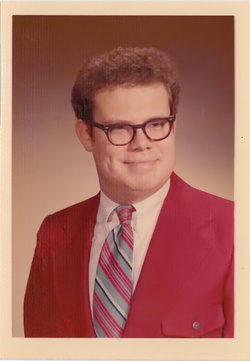
On this Father’s Day, I’m thinking of my dad, and wondering why I don’t have the same painful reaction to that holiday as I have to Mother’s Day. Perhaps it’s because my dad had a long, good life, my mom, not so much. In any case, this year I've been thinking about all these connections between Dad and Syracuse, NY, and with Syracuse University in particular. Although I moved away from Syracuse in 1979, the choices my Dad made all those years ago still echo through my own life.
Happy Father’s Day to all who celebrate it, whether or not your father is still around.
Karen




For Weekend Assignment #241: Talk of the Town, I asked you to tell me what you've been overhearing (or just plain hearing) as you go about your day. Not many people admitted to listening in on the conversations of others, but here's what you did say:
Julie said in comments...
Wow, I've not been out much lately. A cold will do that. So no eavesdropping tales for me this week. Unless I manage to think of something in the next few days.
Scobberlotcher said...
Absolutely true comments made to me at a recent party after the host introduced me as a writer.
Guest: Oh, what’s your book about?
Me: Janeology is a family tragedy story. A husband is shocked to learn his gentle wife has committed murder and begins looking for clues about impulsive violence in her family tree.
Guest: Ooooooh. Maybe the next one will be more hopeful.
[Goes in search of dip. Doesn't make eye contact the rest of the night.]
[That's just the beginning!-K.]
Florinda said...My favorite place to overhear things is probably the hair salon. Most of the stylists there are women in their twenties, and they seem to have very active social lives - which they are happy to talk about at length, and at full volume. (I swear that was not intended to be a hair pun!) My own stylist is a fairly quiet one, but her co-workers frequently entertain me while I'm getting my color and cut.
Mike said...I overhear most things at work. As with most jobs, we are in cubes. Ours are very close together and the walls are low. This allows us to talk to each other when we need to, which at my job is often, but it also allows us to hear many things. Sometimes I think people forget about that.
That's it for now! I hope you'll take the time to participlate this week, because I'm genuinely interested in the half-forgotten legacy of all those old local tv shows. Write about it in your blog or journal, and include a link back here. Then leave a link to your entry in the comments below. Please don't forget your links! I'll be back in a week to highlight the results.
Also, I'm running a little low on ideas here, so it's time to ask for some input. What would you like to see as a Weekend Assignment topic? Email me your suggestions (mavarin at aol.com). If I use your topic you'll get full credit and my undying thanks.
Karen